Introduction
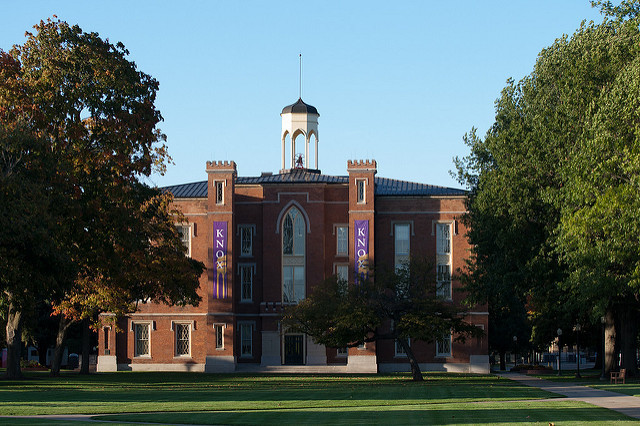
Throughout the course of 10 weeks, while enrolled in a class entitled Anthropology of/with the senses, instructed by Professor William Hope, us as students completed 3 visual compilations with text explanations of specific experiences in correspondence with topics we have been learning and works we have been reading. We learned and used a platform called Story Map JS, allowing us to represent our experiences in visual and textual manner that is also engaging to the viewer. The topics we completed these complications on are as follows: ‘Study Habits’, ‘A Typical Day’ and, ‘Embodiment and Body Techniques’. Sandwiched in between the introduction and conclusion to this page are the Story Maps in chronological order of completion. Feel free to take yourself into the sense I have made of my personal experiences on the campus of Knox College. Before or after viewing the story maps, if you wish to, I have outlined the process and system I used to create these story maps, which may give you more insight to (broadly) what these Story Maps entail.
Study Habits- In the Study Habits Story Map we were asked to make sense of how we study best. For example, you will see images of my favorite study spot on campus, the sensory elements of the spot and why that spot is my favorite. In addition, you will see a friend of mine’s favorite study spot, some of their study habits and a comparison of the ways we study.
A Typical Day- In the second Story Map we created, we went documented our movement throughout a typical day in our life. We gave detailed attention to the things in which we may neglect or oversee throughout a typical day that we experience. Then, we related our findings to a piece entitled “A Sense of Place, A Sense of Time” written by Vannini Et. Al.
Embodiment and Body Techniques- In the final Story Map, we attended an event on campus in which other students or people would also be in attendance. We took pictures of significant images at this event and also conversed with a friend who was also in attendance at the event to discuss our take aways of how bodies are organized and self-organizing in place. We used the method of participant observation which is observing a subject (event) but also taking part in the action as well. Then, we went deeper into connecting this Story Map to multiple readings we have done throughout the term.
Conclusion and Final Thoughts
Study Habits- This Story Map allowed me to think deeper about why and how the way and where I study works for me. The process of writing about my habits cemented this further for me apart from the images I took. I was able to understand the importance for me of studying near a window, as it lets me feel less entrapped within a space, the need of a chair that moves with my body so I can stretch and the value of working by myself so I can truly be engaged with my work. Normally, when I go to study I am too engaged with my work or the thought of having too much work to take notice of the habit I have and why this habit I am rooted in works for me. I enjoyed being on what felt like the other side of things, as almost an observer to my own habit.
My Study Habits Story Map was one my favorites to complete as I feel very passionate about my favorite study cubical on the third floor of Seymour library. Throughout my two years here on campus, I have become attached to the particular study cubical I frequent in addition to the third floor of Seymour library. From, the window to the chair that moves and the books around me, I love it all. So, it was very fun to write about, take multi-sensory images and describe what exactly makes this spot so special. In addition, I enjoyed learning about one of my friend’s study habits and to learn they enjoy the cubicles on the second floor of Seymour library which are similar in nature but also quite different. I enjoyed the conversation we had and comparing and contrasting the two.
A Typical Day- The second Story Map of the series was one I learned most from. As we were asked to document and write about a typical day in our life, I began to see deeper the things that feel mundane and understand them as complex and beautiful intricacies of the human experience. Repetitive motions or habits that occur every day, sometimes feel like a task, feel like they never change or feel like the same day over and over again. However, by being intentional to notice what I notice, I discovered, each day the motion looks, feels and sounds different making routine inherently different each time it is performed.
The Typical Day Story Map was a learning curve for me but also my favorite to complete with that being said. I found myself trying to accurately represent what a typical day would look like for myself, instead of representing what my experiences throughout the day were truly like. The day that I choice to represent as a typical day ended up being not-so typical at all as I had encounters, I don’t have every day, paths I don’t take every day and much more. I noticed that no matter what stays constant throughout my day from waking up to the birds chirping, going to Spanish class, noticing the trees around me, it is still different each day no matter if I could describe it as routine. How I feel about the birds chirping changes each day or how well I notice them, what we learn in Spanish is different each day, I arrive at a different time each day and the trees are constantly in motion, constantly evolving just at a rate I might not take notice of on a day-to-day basis. I concluded that there is no such thing as a typical day.
Embodiment and Body Techniques- The final Story Map was one where I attempted to notice what I notice more deeply and also participate in the event itself. This brought a bit of conflict along with it as it is difficult for me to fully immerse myself into an experience while also attempting to intellectualize my surroundings to report them back for this assignment. I concur that participant observation as an ethnographic method in the discipline of Anthropology relates to Ingold’s argument in his piece “Knowing from the Inside”, that Anthropology as a discipline has a tendency to objectify the subject of study through the process analyzation for the purpose to learn about the subject rather than learn from it. I tried to learn from this event about how and why bodies are organized and self-organizing, rather than learn about queer prom and the attendees themselves. This was not to take away from their identities but rather to understand more their identities in the context of how they are situated in an event such as queer prom.
I finished the Embodiment and Body Techniques with the most take aways in comparison to the other Story Maps as I connected many of my observations to readings throughout the term. I felt like being in practice of trying to notice what I notice throughout the term; I was able to dive deeper into learning from what I was observing. As I was reflecting, I noticed more than I did in the moment. I took note of the fact that bodies do not situate themselves for no rhyme or reason but rather typically in a way they are familiar with or comfortable with.
Final Connections- My experience in Anthropology of/with the senses has allowed me think and feel deeper about how others and I operate in the world around us. I feel more enlightened about the concept of the human experience not simply being rooted in the physical or consistent of physical observations such as things you can see, feel, touch, taste or hear but also consistent of historical and socio-cultural practices which teach us directly and indirectly how to engage with the world around us, which then effects how we perceive these physical observations. These historical and socio-cultural practices are not necessarily observable on the surface level but can be seen when understanding the world around us as not just a physical entity but rather a collection of individuals with shared or unique experiences, practices and engagement with each other, nature and the world as a whole.
Thank you!