(Making Sense Of Knox): My Sensorial Journey
By Jaylen Carwell
Correspondence I
CORRESPONDANCE I– This was the first correspondence for the class and it focused on “Making Sense Of The Ways and Places We Study Best”, and with our focus set we where tasked with evaluating our own and another’s study habits and locations. While also highlighting the sensory experiences in relation to our body, time and sense of place.
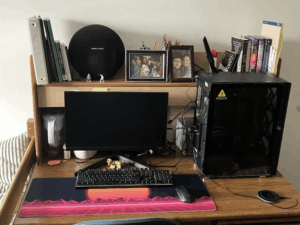
CORRESPONDENCE CONCLUSIONS– Being my first correspondence for this class and given the freedom to execute it however I could while sticking to the set instruction was admittedly daunting. But as I leaned on class guiding class concepts like “Noticing what you notice” which is the idea of taking into account the little sensory aspects of your day to day, and combining them with your more larger observations and the concept of thresholds and place which is the idea of these small sensory aspects of your day being associated with a place, and as you change place you walk in and out of different sensory thresholds that defining that place to you in a sensory way. These guiding concepts allowed me to really flesh out my sensory experiences big and small in relation to mine and my roommates studying habits and our respective study locations. Additionally by the end of the experience it really highlighted the importance of sensory tolerance for me and how thresholds really play a part in that tolerance, as working in my room with my established sensory experiences like my efforts in playing classical and Jazz music to focus while having the AC unit going are my established sensory tolerances, while for my roommate who study’s in the physics lounge of our science-mathematics building on campus, prefers things more loud as our friends also talk and study in that space. I also personally do not like the chalkboards in that space as the scrapping sounds just rub me the wrong way, which further adds to my roomates study space being intolerable for me sensory wise.
Correspondence II
CORRESPONDANCE II- This correspondence focused a lot on the concept of “Sense of Place, a Sense Of Time”, and with our focus set we where tasked with writing out what we would do on a day of our choice in a mini write up before actually following ourselves through that day and taking note of our sensory experiences through out that day.
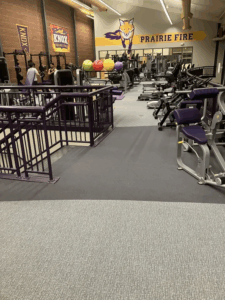
CORRESPONDENCE CONCLUSIONS– This correspondence for me definitely further built upon our classes guiding concepts of “Noticing what you notice”, and thresholds as it really pushed me to really acknowledge a lot of the smaller sensory parts that made up my day and the locations they happen in to which I associate them to. From something as simple as the elevator chime I hear every morning and afternoon upon going between my two classes in George Davis Hall (Our campus’s social science, education and language building) to the exchange of banter I hear at different volumes at our campus’s cafeteria between lunch and dinner. Additionally this correspondence really put into a play a quote I resonated with from our class reading “How to Get from Space to Place in a Fairly Short Stretch of Time” by Edward Casey, where he quotes; “Instead a place is something for which we continually have to discover or invent new forms of understanding, new concepts in the literal sense of ways of “grasping-together.” (Casey, Pg 329). As Casey highlights you essentially go to a place either new or old and continue no matter how often you go. Your always giving that place new meanings or in my case new thresholds to associate it with. In relation to a sense of time as well through this correspondence, Casey’s idea of grasping-together new understandings and ways to see these places was something I related to throughout this correspondence more that others, and with time into the equation I really began to notice just how much I do in a day while acknowledging all of the little sensory bits of my day that truly create these thresholds I continue to alter with sensory experience.
Correspondence III
CORRESPONDANCE III- This correspondence focused a lot on the processes of embodiment, body techniques and sensory communities, and with our focused set we where tasked with going to an event of our choice and observing/participating in the ways individuals at this event utilized there bodies within specific activities in certain places or spaces.
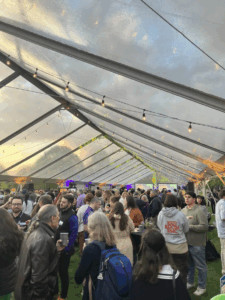
This correspondence, for me personally, was the most enjoyable of the three, as I turned it into a collaborative effort with the help of my two friends, Vincent Tang and Jack Gales. They offered interviews about their experiences at Venture Boldly, a fundraising campaign organized by our campus across multiple cities. The campaign concluded with a penultimate night on campus, featuring music, food, and speeches from both students and staff. Their perspectives on the event and how they utilized their bodies added depth to my understanding of the concept of asynchronous reaction, which I explored throughout this event. The idea that our bodies actively adapt to fit the moment’s circumstances stood out strongly in Jack’s interview. He described the event as “really cool” and “definitely the place to be on campus if you wanted to make connections,” especially since many professors and alumni were present. However, he also noted that the speakers positioned throughout the tent were “exploding his ears.” That comment admittedly piqued my interest me. As It highlighted that while events like these can be positive social and physical experiences, they can also come with sensory challenges reminding us that our bodies can experience the same event very differently. As for Vincent, he came to the event with one goal in mind: capturing “good photos.” With that purpose, he physically moved through various parts of the venue, positioning himself to get the best shots. He focused on different points of interest, one of which he mentioned specifically the coffee cart, which is also featured in the story map linked to this project.
Quick Connections
QUICK CONNECTIONS- Taking a step back at these individualized deep dives on each of my correspondences how can I quickly connect them to the larger concepts we’ve focused on these 10 weeks ?
- Correspondence I and II built upon one another, as the first one introduced me to the concept of Thresholds and Noticing what you notice. While two further built upon my personal understanding and eventual acceptance of these thresholds I change throughout my life while opening myself up to really acknowledge those smaller sensory activities during my efforts in noticing what I noticed.
- Correspondence III and II to me felt like very similar assignments at first, but looking back on it the third one was more personal and sensory heavy than the first one as I observed more than I participated vs when I asynchronously did both participation and observing for Venture Boldly.
- Correspondence III and II arguably could both benefit from the Casey quote I provided.